Trump Administration Blocks Chinese Humanoid Robots in US Market
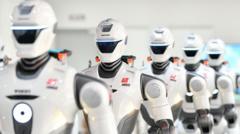
Trump Administration Enforces Ban on Chinese Humanoid Robots
The Trump administration has moved to restrict the importation and deployment of Chinese humanoid robots within United States borders, marking a significant escalation in technological trade tensions. This ban on Chinese humanoid robots represents part of a broader strategy to protect American dominance in the rapidly evolving robotics sector and artificial intelligence landscape.
Background on US-China Robotics Race
The United States and China have entered an intense competition to establish global leadership in robotics and artificial intelligence technologies. Both nations recognize that mastery of these sectors will determine economic power and technological superiority for decades to come. Chinese manufacturers have made substantial advances in humanoid robot development, creating machines designed for industrial applications, healthcare settings, and consumer markets.
Strategic Implications of the Ban
By restricting Chinese humanoid robots from entering the American market, the Trump administration aims to preserve opportunities for domestic robotics companies and research institutions. Officials contend that allowing unrestricted access to advanced Chinese robotics technology could compromise national security interests and disadvantage American firms attempting to compete in these emerging markets.
The restrictions on Chinese humanoid robots also reflect concerns about intellectual property theft and technology transfer risks. Policymakers argue that detailed examination and deployment of Chinese-manufactured robots might reveal proprietary information or enable reverse engineering of critical technologies.
Impact on the Robotics Industry
American robotics manufacturers have generally welcomed restrictions on Chinese imports, viewing the ban on Chinese humanoid robots as protection for their development efforts. Companies investing billions in humanoid robot research and production have expressed support for policies limiting direct competition from lower-cost Chinese alternatives.
However, some industry analysts question whether restricting Chinese humanoid robots will ultimately benefit American innovation. They argue that competition drives technological advancement and that limiting market access could stifle progress in the sector.
Global Competition and Market Dynamics
The broader robotics market remains intensely competitive, with Japanese, European, and Korean manufacturers also developing sophisticated humanoid platforms. The ban on Chinese humanoid robots must be understood within this global context, where multiple nations are racing to capture market share in industries expected to generate trillions of dollars in coming decades.
China's investment in robotics technology has accelerated dramatically, with state-backed initiatives funding research centers and supporting private companies developing humanoid robots for various applications. The restrictions imposed by the Trump administration represent an attempt to slow Chinese advancement while protecting American market opportunities.
Future Outlook for Robotics Trade
The Trump administration's decision regarding Chinese humanoid robots may establish precedent for additional technology trade restrictions. Policymakers are examining other sectors where Chinese companies have achieved significant advancement, considering similar protective measures.
Both nations appear committed to escalating investment in robotics and artificial intelligence capabilities. Whether trade barriers like the ban on Chinese humanoid robots accelerate or decelerate overall technological progress remains uncertain, but the competitive intensity between these superpowers shows no signs of diminishing.