Hamas Disarmament Strategy Offers Gaza Hope Despite Major Political Hurdles
Hamas Disarmament Framework: Navigating Complex Pathways to Gaza Peace
The prospect of Hamas disarmament in Gaza presents a paradoxical scenario—one fraught with substantial difficulties yet containing glimmers of genuine hope for the region's future. While the path toward such an agreement appears laden with obstacles, political analysts and international observers recognize that any meaningful Hamas disarmament initiative could fundamentally reshape the humanitarian landscape of Gaza and establish new foundations for coexistence.
Understanding the Political Complexity
The intricate web of political calculations surrounding Hamas disarmament in Gaza cannot be overstated. Multiple stakeholders—including Palestinian factions, Israeli leadership, regional powers, and international bodies—each hold competing interests and red lines. The political dimensions extend beyond simple military considerations, encompassing questions of governance, representation, and the fundamental structure of Palestinian institutions in the post-conflict period.
Historical precedent reveals that disarmament agreements rarely proceed smoothly. The implementation of any Hamas disarmament framework would require unprecedented levels of coordination and compromise among parties that have spent decades in antagonistic relationships. Trust-building mechanisms must be established from scratch, and verification protocols need to be mutually acceptable to all participants.
The Weight of Military Realities
The military dimensions of any disarmament effort cannot be divorced from the harsh realities of ongoing conflict. Combat operations, strategic considerations, and the distribution of military capabilities create tangible barriers to negotiation. Both sides have invested enormously in military infrastructure, and relinquishing such advantages represents a profound strategic shift that requires careful calculation and guarantee mechanisms.
Military experts emphasize that the disarmament process cannot proceed without addressing fundamental security concerns. Phased approaches, international oversight, and monitored demilitarization zones have emerged as potential models, yet each presents its own implementation challenges requiring sustained international involvement.
Zero Trust Environment: A Critical Obstacle
Perhaps the most formidable barrier to any Hamas disarmament agreement lies in the pervasive atmosphere of zero trust that characterizes relationships between primary parties. Decades of conflict, violated agreements, and mutual accusations have created psychological and political environments where faith in commitments has been systematically eroded. Each side questions whether the other will honor agreements or exploit vulnerabilities created by disarmament.
This trust deficit extends beyond bilateral relationships. International guarantors themselves face skepticism from both parties, forcing mediators to develop innovative confidence-building measures and independent verification mechanisms that neither side can credibly claim favors their opponent.
Humanitarian Devastation and Reconstruction
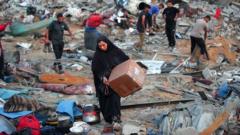
The unprecedented scale of destruction across Gaza creates both practical and psychological dimensions that complicate disarmament negotiations. Thousands of casualties, displaced populations, and devastated infrastructure mean that any agreement must address not only military questions but also humanitarian reconstruction and accountability concerns. Populations traumatized by conflict demand assurances that suffering will cease and that resources will flow toward rebuilding rather than rearmament.
The reconstruction phase following any Hamas disarmament framework would require massive international investment and coordination. Economic development, institutional rebuilding, and social reconciliation cannot proceed in parallel with lingering security threats or military mobilization, placing additional pressure on the disarmament timeline and implementation mechanisms.
Rare Glimpses of Opportunity
Despite formidable obstacles, analysts identify unprecedented openings for progress on Hamas disarmament in Gaza. International pressure, humanitarian imperatives, and war fatigue create conditions where negotiation becomes preferable to continued conflict for significant constituencies. The economic costs of sustained hostilities and the psychological toll on civilian populations generate internal pressure within all stakeholder groups to explore alternatives.
Furthermore, evolution in regional dynamics—including shifting alliances, international involvement, and changing geopolitical calculations—has opened diplomatic channels that remained closed in previous conflict cycles. These new alignments, while creating their own complications, simultaneously offer fresh opportunities for mediators to structure agreements that address multiple stakeholder interests.
Path Forward: Conditional Optimism
The possibility of achieving meaningful Hamas disarmament remains contingent upon political will, international support, and fundamental shifts in threat perception among primary parties. While no timeline or guaranteed outcome can be projected with confidence, the mere existence of serious dialogue about disarmament frameworks represents progress compared to previous conflict iterations.
Successful implementation would require phased approaches, international verification mechanisms, humanitarian guarantees, and reconstruction commitments that address underlying grievances driving conflict. The complexity cannot be minimized, yet the potential benefits—a demilitarized Gaza, reduced civilian suffering, and genuine peace infrastructure—justify continued diplomatic engagement despite the formidable obstacles ahead.