Ecuador's Drug Trade Route: Inside the Battle Against Cocaine Trafficking
Ecuador's Cocaine Superhighway: A Growing Crisis
Ecuador has emerged as a critical hub in the international cocaine trafficking network, with organized criminal groups exploiting the nation's geographic position to establish what authorities describe as a direct cocaine trafficking route to European markets. The escalating drug crime epidemic has prompted intensive police operations and strategic countermeasures to disrupt these illicit supply chains that funnel enormous quantities of narcotics across continents.
The transformation of Ecuador into a narcotics distribution epicenter reflects broader shifts in global drug trafficking patterns. International criminal syndicates have increasingly turned to South American nations as production and transit points, with Ecuador's proximity to major cocaine-producing regions in Colombia and Peru making it an ideal staging ground. Police forces face unprecedented challenges as gangs employ sophisticated methods to move product through ports and across borders.
Inside Ecuador's Police Response
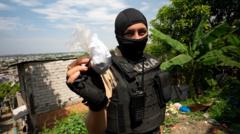
Ecuador's National Police have intensified patrol operations in strategic locations to combat the cocaine trafficking infrastructure. Law enforcement officers working the front lines of this drug war describe encountering increasingly violent and well-armed criminal organizations that control territory and supply routes throughout the country.
These police operations involve coordinated surveillance, checkpoint inspections, and intelligence-gathering activities designed to intercept shipments before they reach international waters. Officers operate in high-risk environments where confrontations with drug gangs have become routine, requiring specialized training and equipment to execute enforcement strategies effectively.
The Scope of the Drug Crime Problem
The surge in drug-related criminal activity extends beyond simple trafficking operations. Gangs involved in the cocaine trafficking network engage in money laundering, protection rackets, and territorial violence that destabilizes communities throughout Ecuador. This comprehensive criminal enterprise creates secondary crime waves that affect civilians far removed from direct drug trade involvement.
Port facilities, airports, and border crossings represent critical vulnerability points where cocaine trafficking organizations attempt to move product internationally. The volume of narcotics transiting through Ecuador suggests that existing enforcement capacity struggles to maintain effective interdiction rates against determined and well-resourced criminal networks.
Police Fightback and Strategic Operations
Ecuador's law enforcement agencies have launched coordinated initiatives to dismantle drug trafficking infrastructure at its source. These police fightback efforts combine traditional investigative work with modern intelligence technology to identify key players within gang hierarchies and identify routes used for cocaine trafficking operations.
Successful police operations have resulted in significant seizures and arrests, though authorities acknowledge that criminal organizations quickly adapt tactics following enforcement actions. The fightback strategy requires sustained commitment and resources, as gangs continuously develop new methods to circumvent detection and interdiction efforts.
The European Connection
European markets represent the primary destination for cocaine trafficking shipments originating from Ecuador. Criminal organizations have established distribution networks across major European cities, creating demand-side incentives that perpetuate trafficking through South America. This transatlantic drug trade generates enormous profits that fund further criminal expansion and gang violence.
The cocaine trafficking route through Ecuador to Europe involves complex logistics, specialized transportation methods, and corruption networks that facilitate movement of illicit cargo. Understanding these international dimensions proves essential for developing effective countermeasures that disrupt the entire supply chain rather than simply addressing localized symptoms.
Looking Forward: Challenges and Opportunities
The ongoing struggle between law enforcement and cocaine trafficking organizations will likely intensify as gangs respond to police pressure by modifying operations. Sustainable solutions require international cooperation, intelligence sharing, and coordinated action across multiple nations involved in this drug trade network.
Ecuador's police continue their challenging fightback against criminal enterprises that profit from cocaine trafficking while destabilizing communities. Addressing this complex problem demands comprehensive strategies that target organizational structures, disrupt supply routes, and reduce demand incentives driving the cocaine trafficking epidemic affecting Ecuador and nations receiving these illicit shipments.